
What It’s Like to Learn to Surf at Any Age in Oceanside
There’s a moment everyone has before they learn to surf. It’s usually standing on the beach, watching waves roll in, wondering if they missed their window. You didn’t. Around Oceanside, you’ll see it all the time. Kids figuring it out in the whitewater, adults getting their first real rides, and people well into their 50s and 60s paddling. Surfing isn’t reserved for people who grew up doing it. It’s just one of those things that looks harder from the outside than it actually is to start. What changes with age isn’t whether you can learn—it’s how you should approach it.
Learning as a Kid
If you walk down to the beach near the Oceanside Pier on a mellow day, you’ll see exactly why kids pick it up so quickly. They don’t overthink it. They fall, get back on, and try again without hesitation. Their balance comes naturally, and they’re not worried about what they look like doing it.
The real challenge at this age isn’t ability; it’s awareness. Waves are hard to read, boards are hard to manage, and lineups get crowded. That’s why the best early sessions are simple. Soft boards, small waves, and just enough structure to keep things safe.

Learning as a Teen
Teenagers are built for progression. They’re strong, coordinated, and when they’re into it, they improve fast. But this is also where things can go sideways. There’s a tendency to rush it—paddling out too far, going after waves they’re not ready for, or skipping the fundamentals because they want to surf “real waves.”
Around North County, that usually means trying to jump from beginner-friendly beach breaks into heavier setups too early or downsizing boards too quickly. The surfers who stick with it are the ones who slow down just enough to actually learn positioning, timing, surf etiquette, and how to move through a lineup without creating chaos. Once that clicks, everything else comes a lot faster.
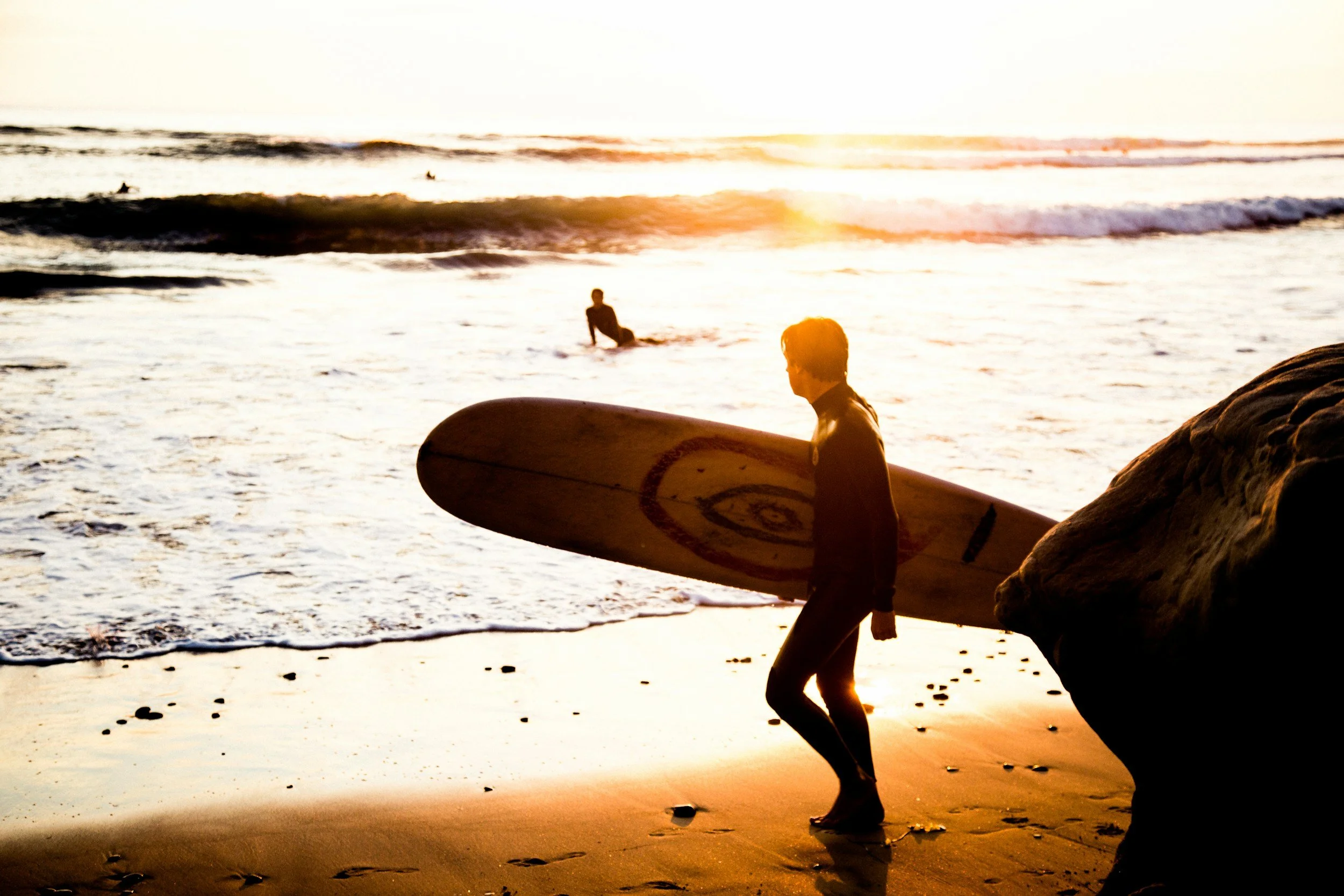
Learning as an Adult
Adults tend to approach surfing as something to figure out right away. They want to understand every detail, and when it doesn’t click right away, frustration sets in. The reality is simpler. Most missed waves have nothing to do with your pop-up. They come down to being in the wrong spot, paddling too late, or not committing.
Places like Oceanside Harbor or Tamarack are perfect for learning because they give you repetition. You’re not dealing with one perfect wave every ten minutes—you’re getting chances over and over again to put it all together. The key to success is consistency. Surfing once every few weeks feels like starting over every time. A few sessions close together, and things start to click.

Learning in Your 40s and 50s
Later in life, your approach shifts. You’re not trying to muscle your way into waves—you’re figuring out how to move more efficiently. Better paddling, better positioning, better wave selection.
Board choice matters more. A little extra volume goes a long way. So does picking the right conditions instead of forcing it on a day that doesn’t make sense. What stands out at this stage is consistency. The surfers who improve aren’t the ones chasing the biggest days—they’re the ones who show up when it’s manageable and surf smart.

Learning Later in Life
You don’t age out of surfing—you just get more selective about how you do it.
On the right day in Oceanside, you’ll see older surfers trimming down clean, mellow lines like they’ve been doing it forever. Some have. Some started later than you’d expect.
The key is keeping things controlled. Smaller surf, stable boards, and a focus on comfort over performance. There’s no rush to stand up right away, either. Riding waves prone, getting a feel for timing and balance—that’s all part of it. A good session here isn’t about how many waves you catch. It’s about leaving the water feeling good enough to come back and do it again.

Why Oceanside Makes It Easier
Not every surf town is forgiving. Oceanside is. You’ve got miles of beach breaks that handle a wide range of conditions, which means there’s almost always somewhere that works for learning. If one spot is too crowded or too heavy, you can move to another spot that's more manageable.
That’s a big part of why people pick it up here. Staying at The Green Room Hotel puts you right in the middle of it. You’re close enough to check the surf quickly, get in the water without overthinking it, and build the kind of consistency that actually leads to progress.